
Club Car Onward HP Troubleshooting: Common Suspension Issues and Fixes
The Club Car Onward HP is celebrated for its smooth ride and robust performance on the golf course or around the neighborhood. However, like any precision vehicle, its suspension system can develop issues over time, especially when subjected to rough terrain or heavy loads. This guide will walk you through the most common suspension problems, their causes, and practical fixes to keep your Onward HP gliding effortlessly.
Whether you are a weekend golfer or a daily user, understanding these suspension nuances can save you time and money. For a broader perspective on maintaining your ride, explore our Club Car Onward HP Safety and Storage: Best Practices for Longevity guide, which covers general care routines.
1. Why Is My Club Car Onward HP Leaning to One Side?
One of the most noticeable suspension issues is a persistent lean, where one corner of the cart sits lower than the others. This often indicates a worn leaf spring, a sagging coil spring (if equipped with the HP’s optional independent rear suspension), or a damaged shock absorber. The lean can also be caused by uneven tire pressure or a loose U-bolt connecting the axle to the spring.
Begin by checking tire pressures—all four should match the manufacturer’s specification of 18–22 psi. Next, inspect the leaf springs for cracks, broken leaves, or excessive sag. On the HP model, the front suspension uses a coil-over-shock setup; a leaking shock can cause one side to droop. If you find a broken spring leaf, replacement is mandatory. Tighten U-bolts to 30–35 ft-lbs, but avoid over-tightening. For persistent lean after these steps, consider replacing both front springs as a pair to maintain balance.
Before diving into complex repairs, verify that the cart is on level ground. A simple parking spot slope can mimic suspension failure. If you are considering upgrading your suspension for better handling, see our Club Car Onward HP Customization: Top 10 Upgrades for Style and Performance for performance spring kits.
2. What Causes a Clunking Noise from the Front Suspension?
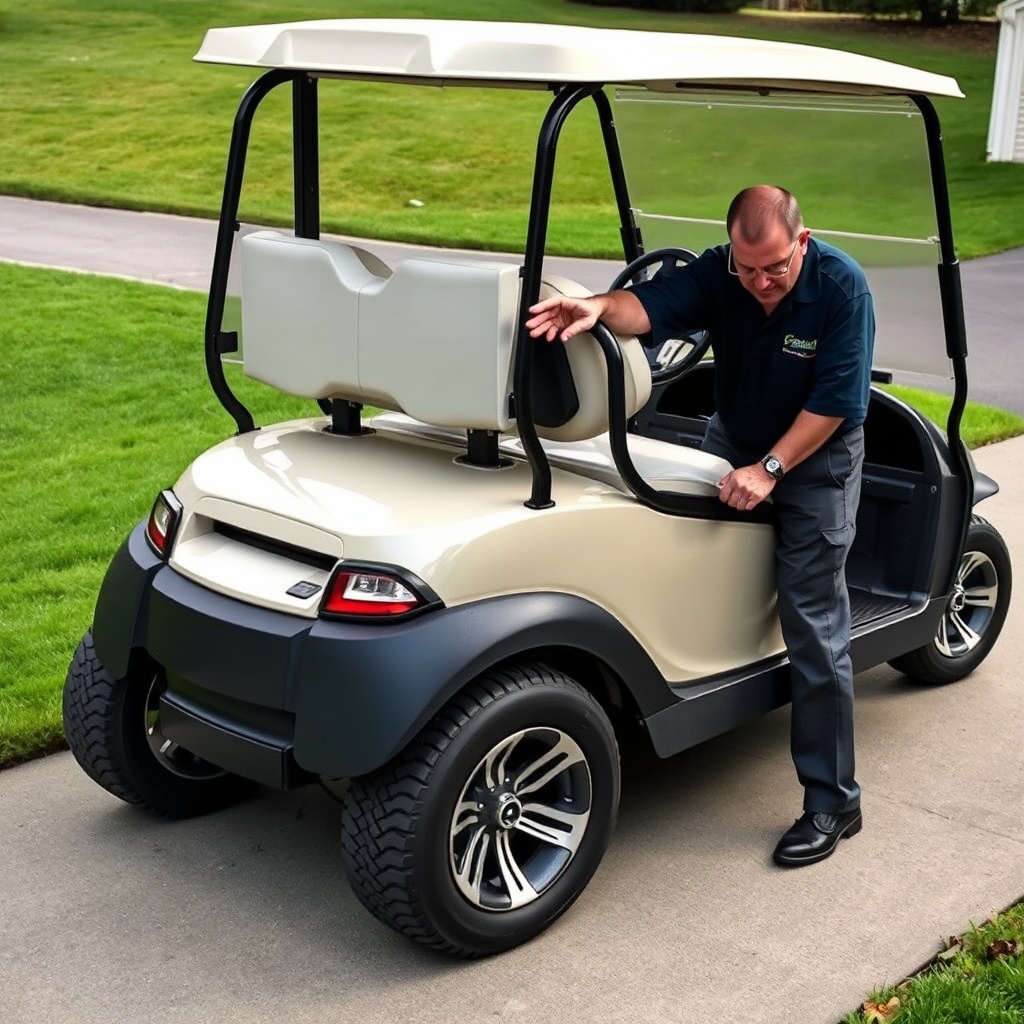
A clunking sound when driving over bumps usually points to loose or worn components in the front suspension. The Club Car Onward HP’s MacPherson-style front struts and tie rod ends are common sources. As the cart ages, bushings in the control arms wear out, allowing metal-to-metal contact. Ball joints can also develop play, leading to a distinct clunk on turns or uneven pavement.
Perform a “bounce test”: push down firmly on the front bumper and release. If you hear rattling or see excessive oscillation, the struts may be worn. Jack the cart up safely and check tie rod ends for play by grasping the wheel at 3 and 9 o’clock and shaking. Any noticeable movement indicates wear. Lubricating grease fittings on the front suspension (if equipped) can silence minor noise, but replacement of worn bushings or ball joints is often the fix. For this repair, use a ball joint press or seek a professional, as improper installation can affect steering. Budget around £120–£200 per side for parts and labor in the UK, or $150–$250 in the US.
Inspect the sway bar links next: these rubber bushings degrade quickly in sun or moisture. Replacing them with polyurethane upgrades is a cost-effective cure. For steering-related noise, our Club Car Onward HP Steering Wheel Upgrades: Style and Comfort article includes tips on reducing steering column vibration.
3. How Do I Fix a Rough Ride on My Club Car Onward HP?
A rough, jarring ride is often due to over-inflated tires, worn shocks, or improper spring rate for the cart’s load. The Onward HP’s standard suspension is tuned for a 600–800 lb (272–363 kg) payload, including passengers and cargo. If you frequently carry heavy loads or have added accessories like a rear seat kit, the stock suspension may bottom out. Conversely, if the cart rides stiff and bounces, the shocks could be worn out, no longer dampening effectively.
Start by adjusting tire pressure to the lower end of the recommended range (18 psi) for a softer ride. Inspect shock absorbers for fluid leaks or physical damage—oil on the shock body is a telltale sign of failure. Replace shocks in pairs (front or rear) for consistent performance. For the rear, if you have leaf springs, consider adding helper springs or air bags to handle extra weight. An aftermarket shock upgrade with adjustable damping can transform comfort, costing around $300–$500 for a set. Always check the condition of the strut mounts, as torn rubber can transfer vibration into the chassis.
If your cart is electric and you notice the rough ride worsening with battery weight, ensure the battery tray is secure. Loose batteries can mimic suspension issues. For optimal battery care, read our Club Car Onward HP Battery Charging Tips: Optimize Performance and Longevity guide.
4. Why Is My Steering Wheel Shaking or Wandering at Low Speed?
Steering wheel vibration or wandering at low speed (below 15 mph) often traces back to worn steering components or incorrect toe alignment. The Onward HP uses a rack-and-pinion steering system on later models; earlier versions have a recirculating ball system. Both can develop play in the tie rods, idler arm, or pitman arm. Improper wheel alignment—specifically toe-in set to 1/8 to 1/4 inch—can cause the cart to drift.
First, check for loose wheel bearings by lifting the front end and wobbling each wheel top to bottom. If there is excessive play, replace the bearings and seals. Next, inspect the tie rod ends for free play—replace if the rubber boot is torn or if you feel slop. For alignment, measure the distance between the front of the tires and the rear of the tires at hub height. The front measurement should be slightly smaller (toe-in). Adjusting the tie rod sleeves requires a 1/2 inch wrench and a tape measure; turn each sleeve equally to maintain centering. A professional alignment service costs about $75–$100 and is recommended if you are unsure.
Steering column issues, such as loose bolts or worn bushings, can also contribute to shaking. Our Club Car Onward HP Steering Wheel Upgrades: Style and Comfort guide covers how a new steering wheel can enhance control and feel.
| Issue | Severity (1–5) | Common Cause | Estimated Fix Cost (£/€) | Tool Required |
|---|---|---|---|---|
| Cart leaning to one side | 3 | Worn leaf spring or shock | £80–£180 | Jack, wrenches, spring tool |
| Clunking front noise | 2 | Loose tie rod/ball joint | £50–£150 | Jack, pry bar, grease gun |
| Rough ride | 2 | Worn shocks or overinflated tires | £100–£300 | Jack, torque wrench |
| Steering wheel shake/wander | 3 | Misalignment or worn tie rods | £75–£200 | Jack, tape measure, wrenches |
| Rear sag with heavy load | 4 | Overloaded or weak springs | £120–£300 | Jack, spring compressor |
5. How Do I Fix Rear Suspension Sag When Carrying Passengers?
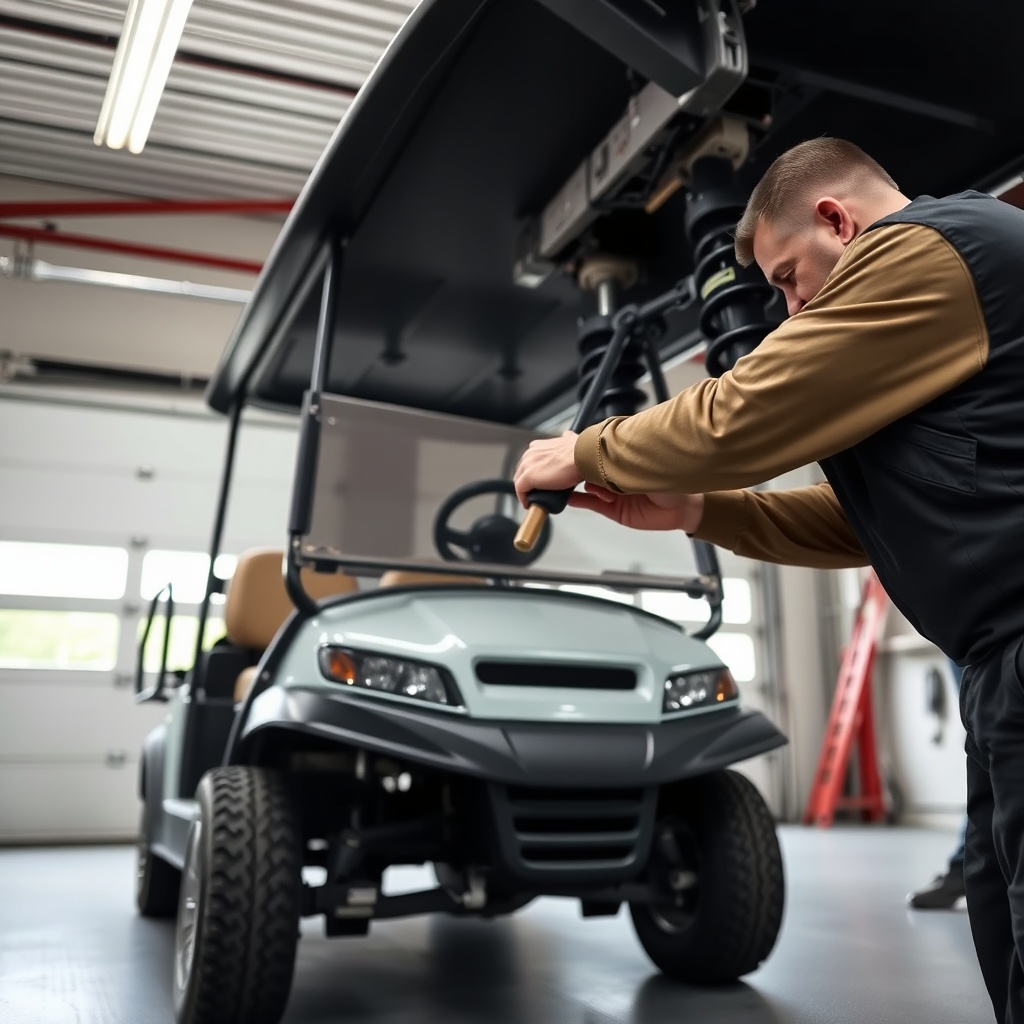
Rear suspension sag is common when the Onward HP is used with a rear-facing seat kit or heavy cargo. Over time, the leaf springs lose their arch, causing the rear to drop. This not only affects ride height but also reduces steering response and can cause the headlights to point downward at night. The fix often involves replacing the rear leaf springs with heavy-duty ones rated for 1000 lb (454 kg) capacity or adding an auxiliary leaf.
Measure the current ride height from the axle to the frame: a stock Onward HP should have about 7–8 inches (18–20 cm) of clearance. If it is less than 6 inches (15 cm), the springs are likely fatigued. For a quick fix, install spring spacers (costing around $40–$70), but these are temporary. A permanent solution is to install a set of dual-rate springs or a coil-over conversion for the rear—available from aftermarket suppliers starting at $350. If the cart is used for golf primarily, standard springs may suffice; for community or fleet use, upgrade to stiffer units. Do not forget to replace shock absorbers simultaneously, as they are often worn.
When performing the replacement, support the frame on jack stands and unbolt the U-bolts and shackles. Note the orientation of the spring bushings and replace them with polyurethane ones for better durability. Tighten all bolts to the specified torque: U-bolts at 35 ft-lbs, shackle bolts at 25 ft-lbs. Test drive slowly to settle the suspension before fully tightening again.
6. Should I Upgrade to an Aftermarket Suspension for Better Performance?
Aftermarket suspension upgrades can dramatically improve the ride and handling of the Club Car Onward HP, especially if you use it off-road or carry heavy loads. Options include long-travel front kits, heavy-duty rear leaf packs, and adjustable coil-over shocks. The trade-off is cost—a full long-travel front kit runs $600–$1,200—and installation complexity, which may require cutting or welding on the frame. For most users, replacing worn components with premium versions (e.g., Bilstein or Fox shocks) provides enough improvement without drastic modification.
Consider your primary use: for golf course duty, a mild upgrade to gas-charged shocks and polyurethane bushings is ideal. For utility or trail driving, a 2-inch lift kit with front coil-overs and rear spring lift gives ground clearance for obstacles—but note that lifting increases driveline stress and may affect stability at speed. Always ensure the upgrade is compatible with the Onward HP’s chassis; some kits are model-specific. Check the warranty on your cart, as lifting can void it.
If you are planning other upgrades, read our Club Car Onward HP Customization: Top 10 Upgrades for Style and Performance for ideas on integrating suspension with wheels and tires.
What Owners Say
Club Car Onward HP owners on forums and in user groups often praise the cart’s baseline comfort but note that suspension issues appear after 18–24 months of regular use. “My 2022 Onward HP started leaning after a year. Replaced the front springs as a pair—fixed it completely for $180,” says a Florida golfer. Another owner reports: “Clunking was driving me nuts. Turned out to be loose sway bar links. Tightened them, and silence.” Some owners with heavy cargo (e.g., five passengers) recommend the heavy-duty leaf spring upgrade early on: “Installed HD springs and now it sits level even with four adults.” Common advice includes checking tire pressure monthly and greasing suspension fittings every 50 hours of use. The overall sentiment is that the Onward HP is reliable, but proactive maintenance preserves its refined ride.
Frequently Asked Questions
Q1: How often should I inspect the suspension on my Club Car Onward HP?
A: Inspect every 3 months or 100 miles, whichever comes first. Look for leaks, cracks, and loose bolts.
Q2: Can I replace just one shock absorber?
A: It is not recommended—always replace shocks in pairs on the same axle to maintain balanced damping and handling.
Q3: Will a lift kit affect the warranty?
A: Possibly. Many manufacturers void suspension coverage if a lift kit is installed, so check your warranty terms before modification.
Q4: What is the best tire pressure for a smooth ride on pavement?
A: 18 psi front, 20 psi rear offers a good blend of comfort and stability. Reduce to 16 psi for off-road use.
Q5: Why do my new suspension parts still make noise?
A: If new parts are noisy, check for improper torque, missing rubber washers, or interference with brake lines. Also, ensure all fasteners are fully tightened after a test drive.
Q6: Does the electric vs. gas Onward HP have different suspension parts?
A: The chassis and suspension geometry are nearly identical, but the electric version has additional battery weight. For details, read our comparison: Club Car Onward HP Gas vs Electric: Which Powertrain Suits You?