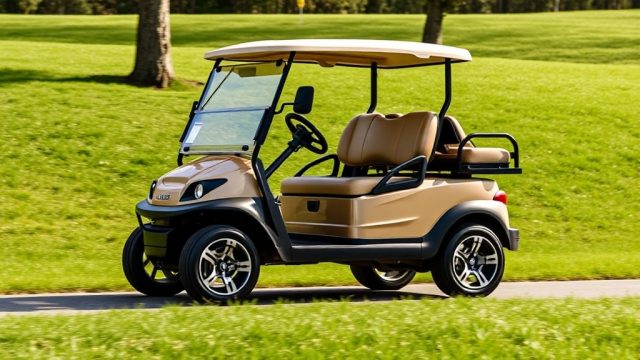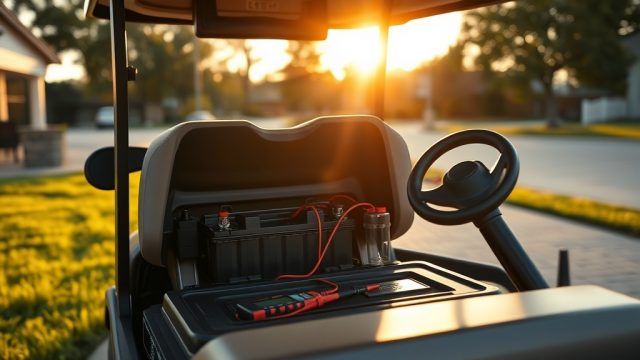
Understanding the Importance of Braking System Upgrades for Your Club Car Onward HP
The Club Car Onward HP is a robust golf cart known for its power and versatility, but stock braking performance can sometimes fall short when tackling steeper terrain or carrying heavier loads. Upgrading the braking system is not just about stopping faster—it’s about ensuring consistent, reliable stopping power in all conditions, significantly boosting both safety and driver confidence. This guide focuses on troubleshooting and repairing common braking issues, while also exploring high-impact upgrades that transform your cart’s stopping ability.
Why Does My Club Car Onward HP Brake Pedal Feel Spongy or Soft?
A spongy brake pedal is one of the most common complaints among Onward HP owners, often indicating air in the hydraulic brake lines or degraded fluid. This issue compromises safety and requires immediate attention. The troubleshooting process begins with a thorough inspection of the brake master cylinder reservoir—check fluid level and condition; dark or murky fluid suggests contamination. Next, bleed the brake system using a proper two-person method or a vacuum bleeder, starting from the wheel cylinder farthest from the master cylinder and working inward. If the pedal still feels soft after bleeding, inspect all rubber brake lines for bulging or cracks, which can cause fluid to expand under pressure.
For persistent sponginess, the master cylinder itself may be failing internally. In some cases, owners have found that the brake shoes are misaligned or excessively worn, requiring adjustment or replacement. A high-quality upgrade like a braided stainless steel brake line kit can eliminate line expansion, providing a firmer pedal feel and more immediate response. This is a critical upgrade explained further in our Club Car Onward HP Troubleshooting: Common Braking Issues and Fixes article.
How Do I Diagnose Warped or Damaged Brake Drums on My Onward HP?
Brake drums on the Club Car Onward HP can warp due to excessive heat from repeated hard stops, especially on golf courses with steep hills or when driving on pavement at higher speeds. Symptoms include a pulsating brake pedal, a shuddering sensation when braking, or a rhythmic grinding noise. To diagnose, safely lift the rear axle and remove the tire and wheel hub. Visually inspect the drum interior for uneven wear patterns, scoring, or blueish discoloration (heat damage). Use a micrometer to measure the drum’s inner diameter at several points—if variation exceeds 0.005 inches, the drum is warped and should be replaced.
Replacement drums are relatively inexpensive (typically $40–$80 per drum) and can be found through aftermarket suppliers. However, consider upgrading to vented or drilled brake drums, which dissipate heat more effectively and resist warping. Pairing these with high-friction brake shoes (e.g., carbon-metallic compounds) can dramatically improve stopping performance. For a complete overhaul, our Club Car Onward HP Customization: Top 10 Upgrades for Style and Performance guide lists premium brake kits worth exploring.
What Are the Best Brake Fluid and Bleeding Procedures for the Onward HP?
Using the correct brake fluid is essential for the Onward HP’s hydraulic system. Club Car recommends DOT 3 or DOT 4 brake fluid, but for high-performance applications, DOT 5.1 (synthetic, non-silicone) offers a higher boiling point and better moisture resistance—important if you frequently drive in hilly areas or with heavy loads. Never use silicone-based DOT 5 fluid, as it is incompatible with the system’s rubber seals and will cause damage.
The correct bleeding procedure:
- Secure the cart on a level surface, chock the wheels, and disconnect the battery.
- Remove the master cylinder cap and top off with fresh fluid.
- Attach a clear hose to the bleeder valve on the right rear wheel cylinder, submerge the other end in a container of clean fluid.
- Have an assistant pump the brake pedal 3–5 times and hold it down firmly.
- Open the bleeder valve until fluid flow stops (watch for air bubbles), then close the valve before the pedal reaches the floor.
- Repeat at each wheel: right rear, left rear, right front, left front.
- Check fluid level frequently; never let it drop too low.
How Can I Upgrade the Brake Shoes and Hardware for Better Stopping Power?
Stock brake shoes on the Club Car Onward HP are adequate for typical golf course use, but for heavier carts (e.g., with added seats, utility boxes, or lifted suspensions) or for owners who drive at sustained speeds on public roads, upgrading to premium shoes is a smart move. Aftermarket options include:
- Carbon-metallic shoes: Provide higher friction coefficient, better heat dissipation, and longer life. Expect to pay $50–$90 per set.
- Ceramic shoes: Quieter operation with little dust, ideal for street use. Typically $60–$100 per set.
- Heavy-duty hardware kits: Include upgraded springs and pins that maintain proper shoe alignment under heavy loads.
When replacing shoes, also inspect the backing plate for rust or deformation. Liberal application of anti-seize compound on the adjuster mechanism prevents seizing. If your Onward HP still stops poorly after shoe replacement, consider a full disc brake conversion, which offers superior modulation and fade resistance. Our Club Car Onward HP Accessories Guide: Must-Have Add-Ons for Comfort and Utility covers compatible conversion kits and their installation costs.
What Brake Issues Are Common with the Club Car Onward HP Electric vs. Gas Models?
While both electric and gas Club Car Onward HP models share the same basic drum brake design, there are subtle differences in their braking systems and common issues. Electric models often incorporate regenerative braking, which can mask worn friction components until they fail completely. Owners of electric carts may experience a “clunking” noise when regen engages, pointing to loose motor mounts or a failing speed sensor that interferes with the hydraulic brakes. Gas models, meanwhile, can suffer from brake fade more quickly due to the engine’s higher operating speeds and weight.
Another key difference: gas carts use a vacuum-assisted brake booster on some years, which can fail, causing a hard brake pedal. Electric carts lack this booster, so pedal effort is typically higher but more consistent. For a detailed comparison, see Club Car Onward HP Gas vs. Electric: Pros and Cons Compared.
| Component | Stock (Price) | Upgrade | Upgrade Price (USD) | Labor Time (DIY) |
|---|---|---|---|---|
| Brake Shoes (Set) | $25–$35 | Carbon-Metallic | $60–$90 | 1–2 hrs |
| Brake Drums (Pair) | $40–$80 | Vented/Drilled | $120–$200 | 1.5–3 hrs |
| Hydraulic Lines | $15–$25 (rubber) | Stainless Steel Braided | $80–$150 | 2–4 hrs |
| Master Cylinder | $40–$70 | High-Performance (aluminum) | $120–$180 | 1.5–2 hrs |
| Disc Brake Conversion Kit | N/A | Full front or rear kit | $400–$700 | 4–8 hrs |
What Owners Say About Braking Upgrades on the Club Car Onward HP
Community feedback across golf cart forums and owner reviews consistently highlights that upgraded brakes are one of the most impactful modifications for the Onward HP. Many owners report that a simple shoe and drum replacement with premium parts eliminated the “fade” they experienced when descending hills with a full load. One owner mentioned that installing a stainless steel brake line kit completely solved a two-year struggle with a spongy pedal that standard bleeding couldn’t fix. Another user noted that after switching to a disc brake conversion, stopping distance on wet pavement improved by nearly 40%, giving them peace of mind when driving in residential areas at dusk. Some caution that disc conversions require more frequent adjustment, but most agree the performance gain outweighs the maintenance.
A recurring theme is that proper troubleshooting should always come before upgrading—many owners saved money by first addressing battery issues (especially on electric models) that were causing erratic brake engagement. Others emphasized that a well-maintained stock braking system, with fresh fluid and adjusted shoes, can be sufficient for moderate use. But if you push the Onward HP’s limits, investing $200–$500 in targeted upgrades transforms it into a safer, more capable machine.
Frequently Asked Questions (FAQ)
How often should I bleed the brakes on my Club Car Onward HP?
Every 12 months or 100 hours of operation, whichever comes first. More frequently if you notice a spongy pedal or drive in dusty/wet conditions.
Can I use DOT 5 brake fluid in my Club Car Onward HP?
No. DOT 5 is silicone-based and incompatible with the rubber seals in your Onward HP’s brake system. Stick with DOT 3, DOT 4, or DOT 5.1.
What is the cost to upgrade from drum to disc brakes on an Onward HP?
Complete front or rear disc brake conversion kits range from $400 to $700 (USD). Professional installation adds $200–$400, but many DIY-ers complete the job in 4–8 hours.
Why does my Onward HP brake pedal go to the floor intermittently?
This often indicates a failing master cylinder (internal bypass) or a small leak in one of the wheel cylinders. Inspect for fluid puddles at the wheels and check the master cylinder reservoir level.
Do lifted Club Car Onward HP carts need stronger brakes?
Yes. Lifting the cart increases weight and changes suspension geometry, which can overwhelm stock brakes. At minimum, upgrade to carbon-metallic shoes and vented drums. Some owners add a brake booster kit for gas models.
Where can I buy brake upgrade parts for the Club Car Onward HP?
Parts are available through Club Car dealers, online retailers like Amazon and Golf Cart King, or specialty shops. For a curated list of compatible accessories, consult the Club Car Onward HP Accessories Guide: Must-Have Add-Ons for Comfort and Utility.