Club Car Onward HP Battery Charging Tips: Optimize Performance and Longevity
Proper battery charging is the cornerstone of maximizing the range and service life of your Club Car Onward HP. Whether you rely on the 48-volt lead-acid system or the high-capacity lithium-ion option, following the right charging regimen can add years to your cart’s performance. This guide covers essential charging tips, common mistakes, and expert advice to keep your Onward HP running at peak efficiency.
How Often Should I Charge My Club Car Onward HP Battery?
For lead-acid batteries, the golden rule is to charge after every use, even if you’ve only driven a short distance. Partial discharges cause sulfation, a buildup of lead sulfate crystals that permanently reduces capacity. With lithium-ion batteries, you can charge less frequently—typically after every 2-3 full discharges or when the state of charge drops below 30%. However, keeping lithium batteries at a medium state of charge (around 50-70%) when storing for more than a week is ideal.
For daily drivers, establish a routine: plug in after your last round of golf or neighborhood cruise. Never let a lead-acid battery sit for more than 48 hours without charging, especially in hot climates. A good rule of thumb is to charge immediately after use; the battery is warm, which actually improves charging efficiency.
What Is the Correct Charging Voltage and Current for the Onward HP?
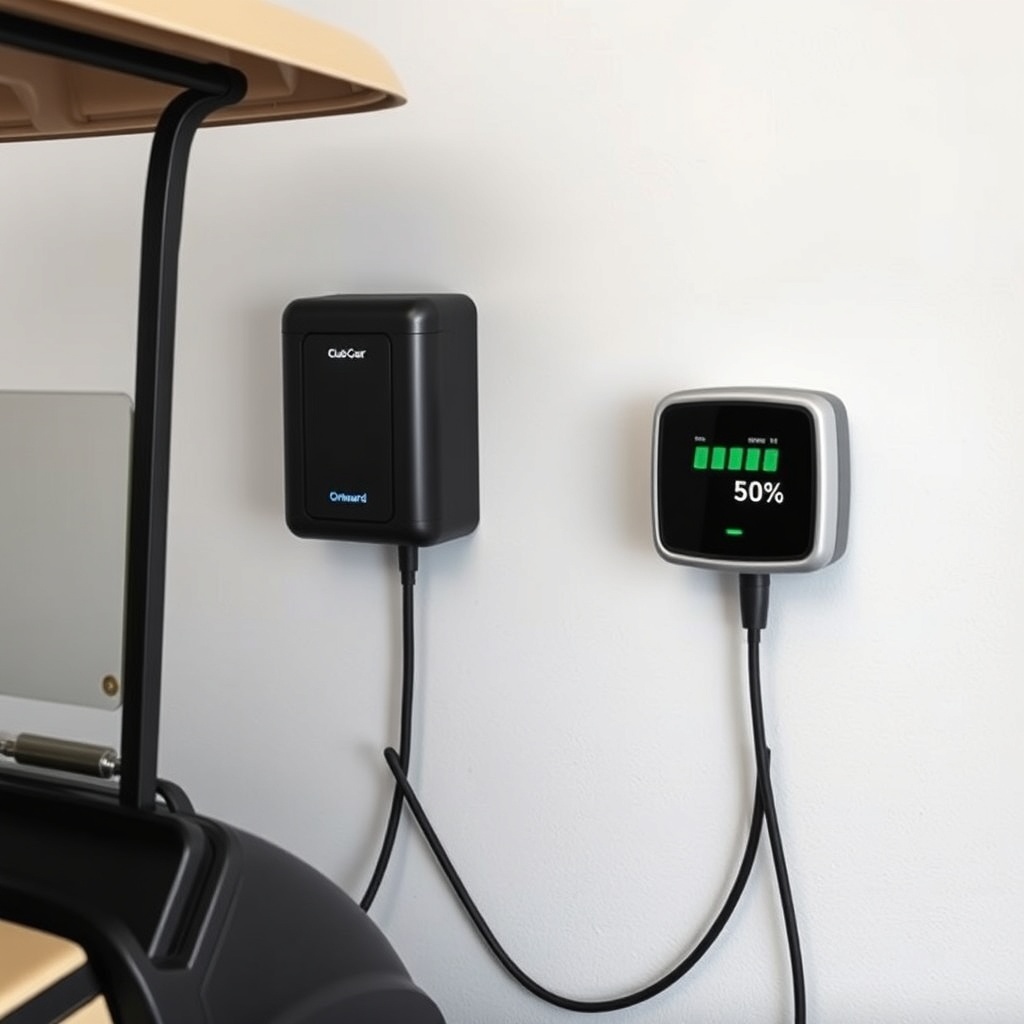
The Club Car Onward HP with the standard 48-volt system requires a charger that outputs between 48V and 60V, with a typical float voltage of 54.4V to 57.6V for lead-acid packs. For lithium-ion, the charger should precisely match the battery management system (BMS) specifications, usually 58.8V for a 48V nominal pack. Using a charger that deviates by more than 0.5V risks overcharging or undercharging, which reduces lifespan by up to 40%.
Always use the OEM charger or a certified equivalent. Aftermarket chargers with adjustable voltage settings can work, but only if you set them to the exact values recommended by Club Car. For the Onward HP’s 190Ah lithium pack, a 25-amp charger is common; charging at higher amperage (30A+) can trigger BMS protection and heat buildup.
What Are the Common Battery Charging Mistakes to Avoid?
Even seasoned golf cart owners make these errors. Here are the top mistakes that harm your Club Car Onward HP battery:
- Overcharging: Leaving the charger connected for days after full charge causes gassing in lead-acid batteries and BMS shutdowns in lithium. Unplug within 4 hours of completion.
- Undercharging: Stopping the charge early (e.g., after 4 hours) leaves sulfation on lead-acid cells. Always let the charger complete its full cycle.
- Using a wrong charger: A 36V charger on a 48V system can cause fire hazards. Always match voltage and connector type.
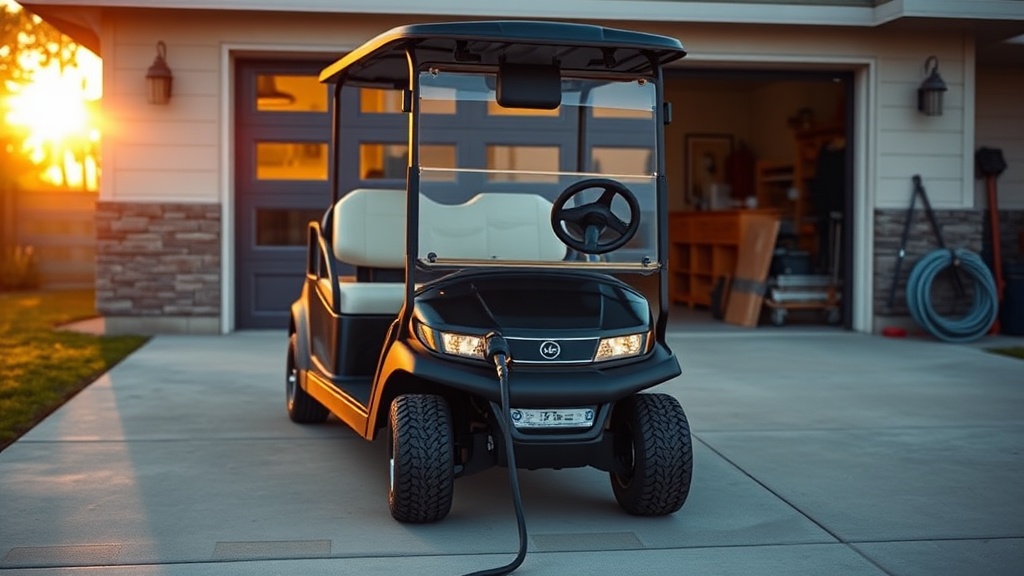
- Charging in extreme temperatures: Below 10°C or above 40°C reduces efficiency. Garage charging is preferred.
- Ignoring water levels: For flooded lead-acid batteries, check water monthly; low levels cause permanent damage.
Avoid mixing battery chemistries—never combine lead-acid and lithium in the same system. This can damage the BMS and cause unbalanced charging.
How Does Temperature Affect Club Car Onward HP Battery Charging?
Temperature is a silent killer of battery performance. In cold weather (below 10°C), lead-acid batteries accept charge slower and may require a “warm-up” cycle. Lithium batteries perform better in cold but should not be charged below 0°C—doing so can cause lithium plating, a safety risk. In hot climates (above 40°C), charging generates additional heat, accelerating chemical degradation. Always park your Onward HP in a shaded area or garage before connecting the charger.
For seasonal storage, keep the battery at a partial charge (30-50% for lithium, 50-70% for lead-acid) and store in a cool, dry place. Avoid direct sunlight on the charge port or battery compartment.
| Factor | Lead-Acid | Lithium-Ion |
|---|---|---|
| Optimal charging temp | 15°C to 30°C | 10°C to 35°C |
| Max safe charge temp | 40°C | 45°C |
| Min safe charge temp | 5°C | 0°C |
| Cycle life (typical) | 500-800 cycles | 2000-4000 cycles |
| Replacement cost (USD) | $800-$1,200 | $1,500-$2,500 |
| Charger time (full) | 8-10 hours | 4-6 hours |
Investing in a lithium upgrade can save $3,000+ in battery replacement over 5 years, especially for frequent users. For more on powertrain choices, see our Club Car Onward HP Gas vs Electric guide.
What Owners Say About Club Car Onward HP Battery Charging
Real-world feedback from Onward HP owners highlights several key insights. Many users report that the factory charger is reliable but slow; switching to a smart charger with temperature compensation improved charge times by 20-30%. “I charge after every round, and my 2019 Onward HP still holds 90% capacity,” says John M. from Arizona. Others note that the battery indicator can be deceptive—showing full charge when it’s actually only 85%—so using a voltmeter is recommended for accuracy.
Several owners upgraded to lithium and emphasize the importance of using a charger compatible with the specific BMS. “I bought a cheap charger and it bricked my battery; Club Car’s support was excellent,” writes Sarah L. from Florida. For a more hands-on approach, consider Club Car Onward HP Customization to add a battery monitoring gauge or solar trickle charger.
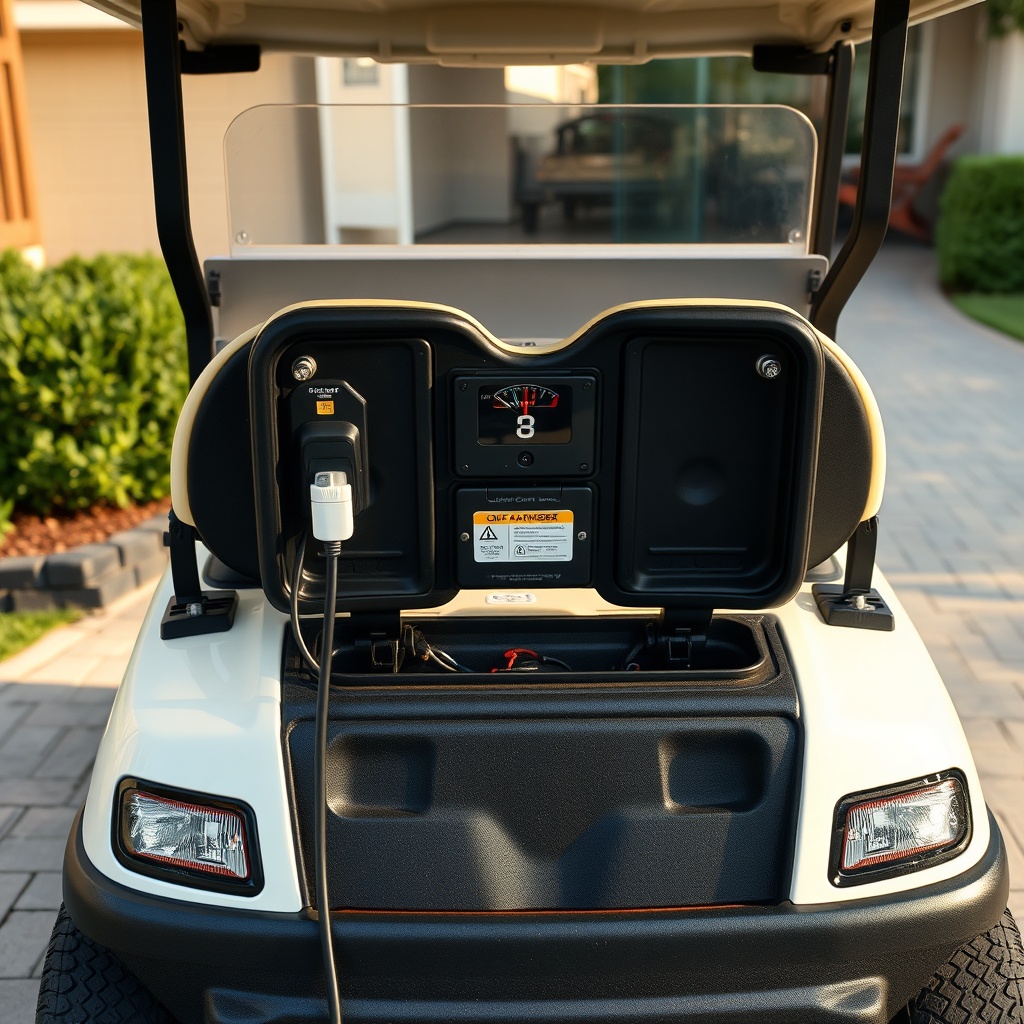
How Can I Extend the Battery Life of My Club Car Onward HP?
Beyond charging habits, proper battery maintenance is crucial. For lead-acid, equalize charging once a month (a controlled overcharge) balances cells. For lithium, avoid full discharges—keep above 20% to prevent deep discharge damage. Clean terminals with a brass brush to prevent corrosion, which can add 0.2 volts of resistance and reduce range.
Consider adding a battery management system (BMS) if you have a custom lithium build. For suspension-related issues that impact battery weight distribution, read Club Car Onward HP Suspension Upgrades. Also, a proper steering wheel upgrade can reduce strain on electrical components—see Club Car Onward HP Steering Wheel Upgrades.
Frequently Asked Questions
Q: Can I charge my Club Car Onward HP with a standard household extension cord?
A: Yes, but only if the cord is 12-gauge or thicker and rated for 15 amps. A lightweight cord can overheat and cause voltage drop, slowing the charge.
Q: How long does a full charge take for the Onward HP lithium battery?
A: With the OEM 25-amp charger, a full charge from 20% to 100% takes approximately 4-6 hours. Charging from a deeper discharge (10%) may take up to 8 hours.
Q: What should I do if my charger stops working?
A: First, check the 120V outlet and circuit breaker. Then inspect the charge port for debris. If the charger has a reset button, press it. If not, test with a multimeter. Most failures are caused by loose connections or blown fuses. For engine-related issues, see Club Car Onward HP Troubleshooting.
Q: Is it safe to charge my Onward HP in the rain?
A: No. Water and electricity are dangerous. Charge only in dry conditions or use a covered charging station. The charge port has a weather seal, but it’s not waterproof.
Q: How do I know if my battery needs replacement?
A: Test the voltage after a full charge—lead-acid should read 49-51V, lithium 52-54V. If range drops by more than 30% from new capacity, it’s time to replace. For buying advice, consult our Club Car Onward HP Buying Guide.
Q: Can I use a car battery charger on my Club Car Onward HP?
A: No. Car chargers output 12V or 24V, not 48V. Using one can damage the battery and charger. Always use a golf cart-specific charger.