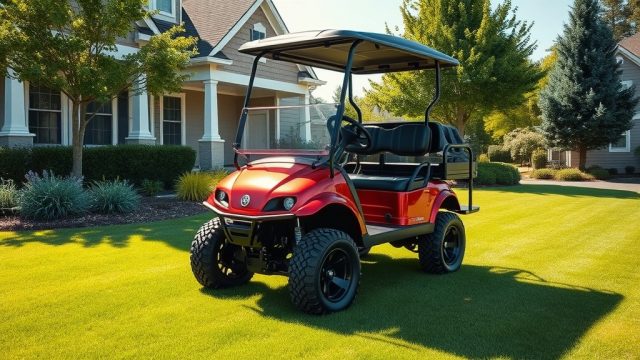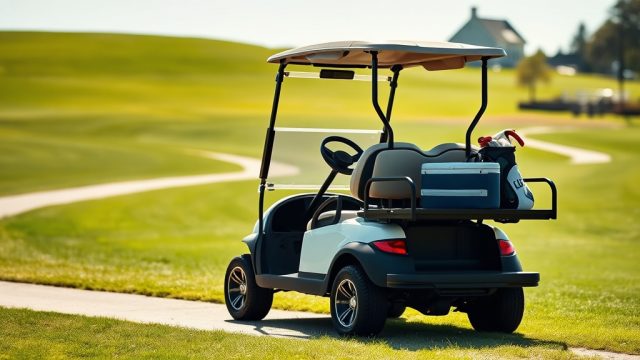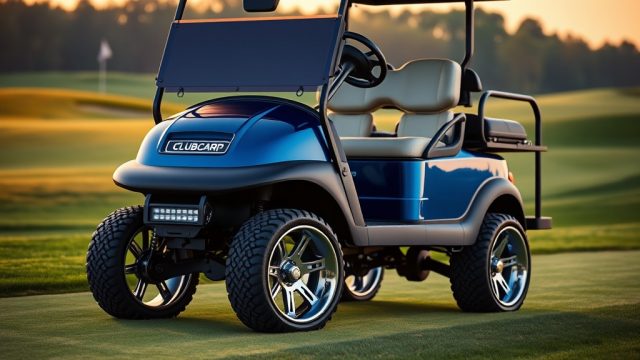
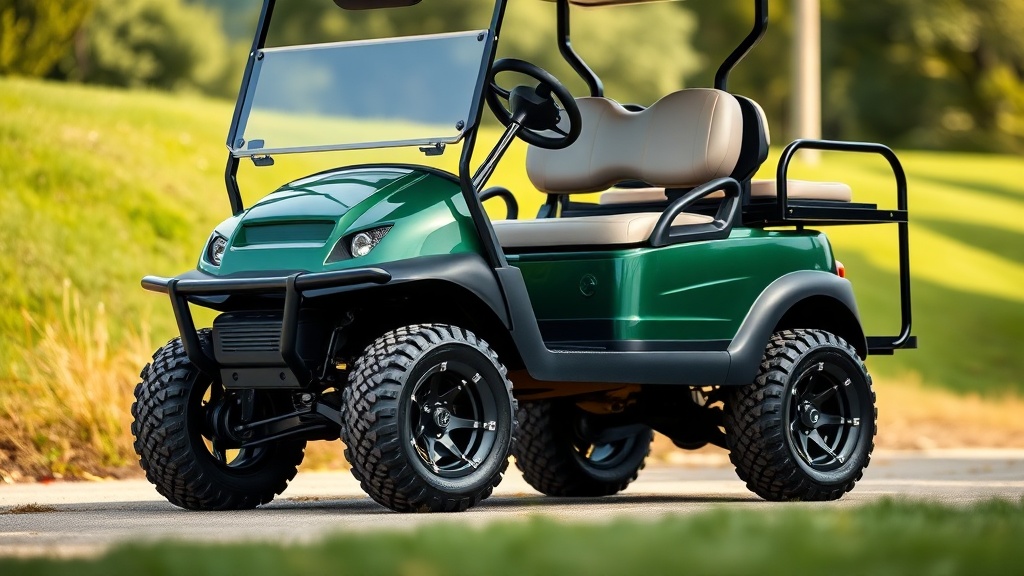
Introduction: Elevate Your Club Car Onward HP Beyond the Factory Floor
The Club Car Onward HP is already a standout in the electric golf cart world, blending smooth on-road manners with off-road-ready suspension and a powerful AC drive motor. But for owners who crave a more personal touch—or who want to eke out every last ounce of performance—a trip through the customization catalog is a rite of passage. From boosted torque for hilly courses to luxurious seating that turns a round into a private retreat, the right upgrades can transform your cart into a rolling statement of style and practicality. In this guide, we break down the top 10 upgrades for your Club Car Onward HP, focusing on customization and accessories that deliver maximum impact for both the weekend golfer and the everyday driver.
1. Why Should I Upgrade My Club Car Onward HP’s Suspension?
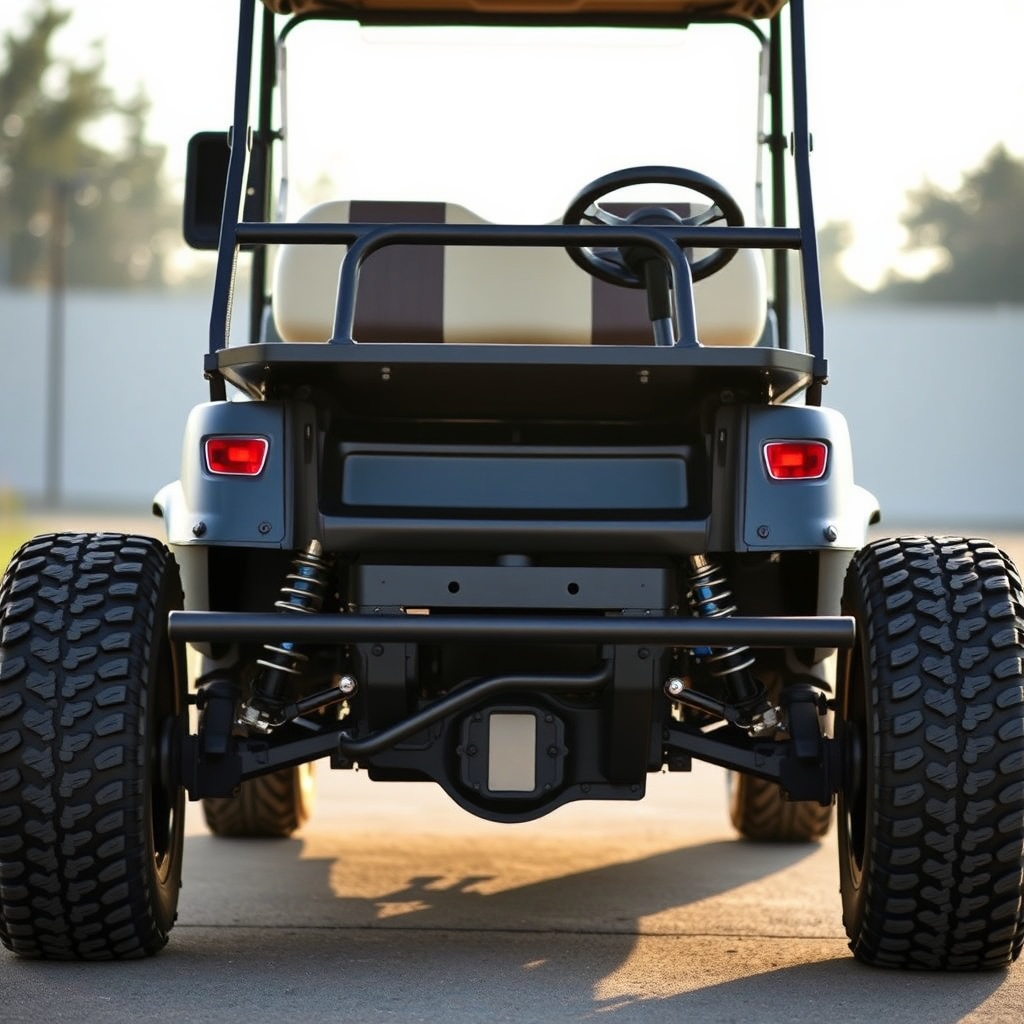
The stock suspension on the Onward HP is decent, offering a comfortable ride over manicured fairways and paved paths. However, if you frequently tackle rough terrain, uneven campgrounds, or just want a more planted feel, an aftermarket suspension upgrade is a game-changer. Brands like Madjax and Jake’s offer heavy-duty lift kits (commonly 3 to 6 inches) that accommodate larger tires and improve ground clearance. A typical 4-inch lift kit costs between $350 and $650 USD, with installation adding roughly $150 to $250 if you’re not a DIYer. The result is a noticeable reduction in body roll during turns and a smoother absorption of bumps.
2. Can I Boost the Club Car Onward HP’s Speed and Torque?
Absolutely. The Onward HP’s 3.4 hp (2.5 kW) AC motor is robust, but a performance controller tune or an upgraded motor controller can unlock higher speed limits and improved low-end torque. For example, a programmable controller from Navitas or Alltrax allows you to adjust parameters such as acceleration curve and field weakening for top speeds up to 25–30 mph (stock is around 19 mph). Pricing for a quality controller upgrade ranges from $500 to $900 USD, plus installation. Pair this with a high-torque motor—like the D&D Motor Systems 5 kW unit—for hill-climbing prowess that rivals gas carts. Just remember: speed upgrades often require tire and brake upgrades too.
3. What Wheels and Tires Offer the Best Grip and Style?
Factory tires are fine for gentle slopes, but for a trail-ready look and grip, consider swapping to all-terrain or off-road tires. We cover this in detail in our Club Car Onward HP Tire Upgrades: Improve Grip and Ride Quality article, but key options include the 23×10-12 Kenda Bear Claws or 22×11-10 Sahara LTs. A popular wheel upgrade is 12-inch or 14-inch machined-aluminum rims, often in black or gunmetal, costing $200–$400 per set of four (tires extra). The right combo improves traction on mud, sand, and grass, while transforming the cart’s aesthetic from utilitarian to aggressive.
To help you compare common tire and wheel packages, here is a specification table:
| Upgrade Package | Tire Size & Type | Wheel Size | Estimated Total Cost (USD) | Best For |
|---|---|---|---|---|
| Street Cruiser | 20×10-10 street tread | 10″ machined aluminum | $500–$650 | Paved paths, low noise |
| All-Terrain Explorer | 23×10-12 all-terrain | 12″ black steel | $700–$850 | Mixed terrain, moderate off-road |
| Mud & Trail Beast | 25×10-12 mud tires | 14″ beadlock wheels | $1,100–$1,400 | Deep mud, rocky trails |
4. How Can I Upgrade the Seating and Interior for Comfort?
The stock bench seat is functional, but upgrading to custom seats can drastically improve comfort and appearance. Options range from premium marine-grade vinyl to heated seats for chilly morning rounds. Aftermarket rear flip-flop seat kits (converting a four-passenger cart to six) cost $300–$600 USD, while front bucket seats from brands like Link 1 or GTR start at $500 per pair. Full interior packages—including floor mats, dash covers, and steering wheel wraps—run $150–$400. For the ultimate luxury, consider a soundbar (like the Rockford Fosgate PMX-BBPL) integrated into the overhead console, priced around $200–$400 USD. These additions transform your cart from a tool into a social vehicle.
5. Are There Lighting Upgrades That Improve Safety and Visibility?
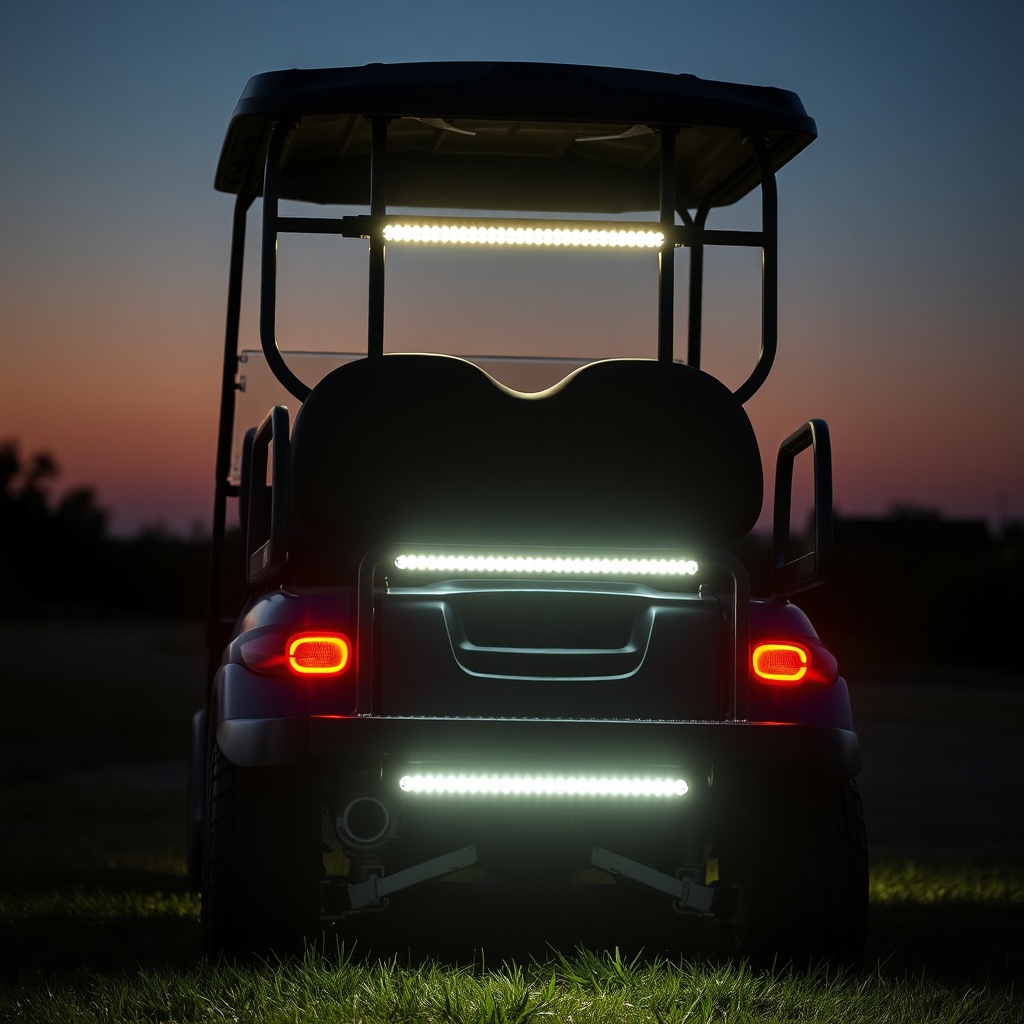
Yes, and they’re among the most impactful and simple upgrades. The factory headlights are adequate for low-light conditions, but LED conversion kits (headlights, tail lights, and underbody glow strips) provide dramatically better illumination and energy efficiency. A full LED light kit from Madjax or Nivel typically costs $150–$300 USD and can be installed in an afternoon. For off-roaders, light bars (20–40 inches) mounted to the roof or front bumper offer 10,000+ lumens, costing $80–$200. Don’t forget turn signal upgrades if your cart is street-legal in your community—a plug-and-play wiring harness is about $50 USD. Better visibility means safer operation on roads and trails.
6. What Performance Battery and Charger Upgrades Are Worth It?
The Onward HP typically uses six 8-volt lead-acid batteries, but if you want more range and faster recharge, the lithium-ion conversion is the biggest leap forward. A 48V 100Ah lithium pack (e.g., from Dakota Lithium) costs $1,500–$2,200 USD but saves 100+ pounds of weight and offers 30–50% more cycles than lead-acid. For those sticking with lead-acid, upgrading to a high-frequency smart charger (like the Lester Summit) for $250–$400 USD can cut charge time by 30% and extend battery life. For comprehensive maintenance tips, see our guide: Club Car Onward HP Battery Maintenance: Extend Your Battery Life. With proper care and a charger upgrade, you can gain an extra 10–15 miles per charge on a mostly flat course.
What Owners Say About These Upgrades
Real-world feedback from Club Car Onward HP enthusiasts is overwhelmingly positive. “I put a 4-inch lift and 23-inch tires on my Onward HP, and it’s like a different animal. The ride is smoother over bumps, and I don’t worry about bottoming out on the rough paths near my course,” reports Mark T., a golf course superintendent from Florida. Sarah L., who uses her cart for neighborhood cruising, says: “The LED light bar and heated seats were my best investments. I can now drive comfortably at dusk and even in light rain.” Several owners note that pairing a controller upgrade with better tires improves overall acceleration noticeably, though they caution that battery drain increases by about 15–20% with high-performance setups. Most agree that the Onward HP is an excellent base platform that responds well to thoughtful modifications.
Frequently Asked Questions
- Q: What is the most cost-effective performance upgrade for the Club Car Onward HP?
A: Upgrading to a high-frequency smart charger (around $250–$400 USD) provides faster charging and extends battery life, offering a good return on investment without major mechanical work. Many owners also find that a simple tire pressure adjustment or a switch to low-rolling-resistance street tires can improve range by 5–10%. - Q: Will upgrading to larger tires affect my speed or torque?
A: Yes, larger tires effectively increase the gear ratio, which reduces torque at the wheels but can increase top speed (if the motor can handle it). A controller recalibration or a high-torque motor upgrade is recommended to compensate. Torque loss of 10–15% is common with a 3-inch tire diameter increase. - Q: How difficult is it to install a suspension lift kit on the Onward HP?
A: It’s a moderate DIY job for someone with basic mechanical skills—all you need are common hand tools and a floor jack. Expect 2 to 4 hours for a 4-inch lift. Professional installation typically costs $150–$300 USD. Always check that the lift kit is specifically designed for the Onward HP model to avoid fitment issues. - Q: Does upgrading the motor or controller void the factory warranty?
A: In most cases, yes, powertrain modifications will void the factory warranty. However, some dealers offer upgrade packages that include warranty coverage. Always check with your Club Car dealer prior to installation. Aftermarket components from reputable brands sometimes include their own limited warranty. - Q: Can I add a stereo system without draining the battery too quickly?
A: Yes, modern soundbars and Bluetooth amplifiers are very energy-efficient. A typical 200-watt system can run for 6–8 hours on a full battery charge without significantly affecting driving range. Consider a lithium-ion upgrade for heavy use, or use a separate 12V accessory battery. - Q: Are these upgrades suitable for street-legal use?
A: Many upgrades, such as LED lighting kits, turn signals, and horn upgrades, can help meet local street-legal requirements. However, tire sizes and lift kits may be regulated. Always verify your local Low-Speed Vehicle (LSV) laws before installing significant modifications. Off-road upgrades generally do not meet road-legal specifications.