Introduction
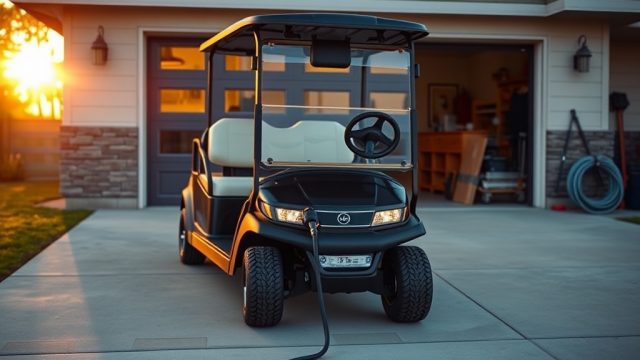
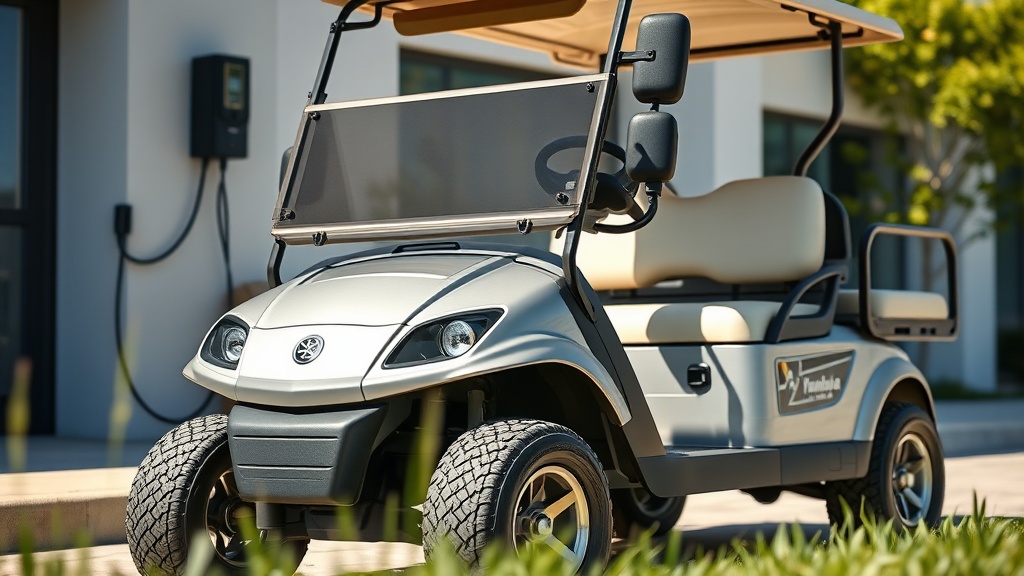
When it comes to maximizing the performance and lifespan of your Yamaha Drive2 PTV, proper battery charging habits are non-negotiable. Whether you rely on this electric utility vehicle for daily commutes around the course or weekend family outings, incorrect charging practices can cut battery life by months or even years. This guide covers six critical battery-charging questions, complete with actionable tips, real-world owner feedback, and a severity comparison table to help you avoid costly mistakes.
How Often Should I Charge My Yamaha Drive2 PTV Batteries?
Consistency is key when charging lead-acid batteries found in most Yamaha Drive2 PTV models. The general rule is to charge after every use, even if the battery gauge shows a full charge. Deep discharges (below 50% capacity) accelerate sulfation, a chemical process that irreversibly reduces capacity. For maximum longevity, plug in the charger within two hours of finishing a drive. This keeps the batteries in a healthy state of charge and prevents stratification, where acid settles at the bottom of the cell.
For newer lithium-ion conversions, the advice shifts slightly: lithium batteries handle partial charge cycles better, but they still benefit from regular top-ups. Aim for a maintenance charge every month if the vehicle sits unused. Always verify the charger matches your battery chemistry—using a lead-acid charger on lithium cells can cause rapid degradation or safety hazards.
What Is the Ideal Charging Voltage and Amperage for My Yamaha Drive2 PTV?
Most Yamaha Drive2 PTV electric models use a 48-volt system with a 15-20 amp charger. The exact numbers depend on the OEM configuration and any aftermarket modifications. Check the label on your charger—typically, a 48V system charges to about 58-60 volts during bulk phase and floats around 54-55 volts when full. Using a charger with mismatched voltage can overheat batteries or fail to reach a full charge.
Consider upgrading to a smart charger that automatically adjusts voltage based on temperature and battery state. This is particularly useful if you operate in climates below 50°F (10°C) or above 90°F (32°C). For reference, a standard OEM Yamaha charger delivers 17 amps at 48V. Aftermarket options range from 10 amps (slow, safe) to 25 amps (fast, but requires monitoring). Stick with the manufacturer recommendation unless you’ve consulted a specialist.
Can I Use a Generic Car Battery Charger for My Yamaha Drive2 PTV?
Absolutely not—this is one of the most common mistakes owners make. Car battery chargers are designed for 12-volt systems and deliver high amperage spikes that damage golf cart batteries. A Yamaha Drive2 PTV operates on 48 volts (or sometimes 36 volts in older models), and its charger is finely tuned to that voltage. Plugging in a car charger can cause overheating, explosive gas release (hydrogen), or permanent sulfation.
Even a compatible 48V charger meant for a different brand like Club Car or EZGO may not handle the Drive2 PTV’s specific charging algorithm. These carts use a multi-stage profile that includes bulk, absorption, and float stages. Mismatched profiles lead to undercharging or overcharging. Always use an OEM Yamaha charger or a certified third-party model explicitly listing “Yamaha Drive2 PTV compatibility.”
What Happens If I Overcharge or Undercharge the Batteries?
Both scenarios reduce battery life significantly. Undercharging leaves sulfate crystals that harden on plates, reducing capacity by up to 20% per cycle. Overcharging causes gassing (water loss), plate corrosion, and in extreme cases, thermal runaway. Here’s a severity comparison table to visualize the risks:
| Condition | Impact on Battery Life | Average Cost to Replace (USD) | Severity Level |
|---|---|---|---|
| Undercharge (below 80% SOC) | 40% reduction in cycle life | $800–$1,200 | Medium |
| Overcharge (above 110% SOC) | 60% reduction, risk of explosion | $800–$1,200 | High |
| Correct charge (100% SOC) | Full 4–6 year lifespan | $800–$1,200 | None |
A smart charger with automatic shutoff prevents overcharging. For undercharging, set a daily reminder to check voltage at rest—after 12 hours off charge, a healthy 48V pack reads around 50.9–51.5 volts. Below 49.5 suggests undercharging or sulfation.
Is It Normal for the Battery Charger to Get Hot During Use?
Some warmth is expected—most chargers run between 100°F and 120°F (38°C–49°C) during bulk charging. However, if the charger casing becomes too hot to touch (above 130°F/54°C), something is wrong. Check for blocked air vents, a faulty fan, or an incorrect charger match. Chargers rarely overheat on their own unless the ambient temperature is extreme or the internal components are failing. If you smell burnt plastic or see smoke, disconnect immediately and replace the charger. Always charge in a well-ventilated area, away from water or combustible materials.
For those considering a Yamaha Drive2 PTV gas vs electric comparison, note that electric models require charger maintenance, while gas models dodge this issue entirely. But with careful charging habits, electric ownership is straightforward.
Should I Leave the Charger Connected All the Time?
Only if you have a smart charger designed for float mode. Standard chargers should be disconnected once the batteries reach full charge. Leaving a dumb charger connected for days or weeks raises the risk of overcharging and water loss. Even smart chargers benefit from occasional disconnection—every few weeks, let the pack rest for 12 hours to equalize cell voltages. For storage longer than 30 days, charge to 100%, then disconnect. Recharge every 60 days to maintain capacity. If you have an Yamaha Drive2 PTV suspension upgrades installed, the extra weight from larger tires or lifted kits may increase power draw, making regular charging even more critical.
What Owners Say
Real-world feedback from Yamaha Drive2 PTV owners highlights a few recurring themes. “My first set of batteries lasted only 18 months because I charged them whenever I remembered, not every time I drove,” says Mark T., a golf course superintendent in Florida. “Now I plug in after every ride, and I’m at 3 years with strong performance.” Another owner, Sarah L., shares, “I upgraded to a lithium conversion and a smart charger. Best money I ever spent—no more water checking, and the cart runs faster uphill.” Several owners caution against using extension cords with the charger, as voltage drops can cause charging errors. “I used a 100-foot extension cord once and the charger kept cutting off,” notes Jeff R. from Arizona. “Dedicated outlet is safer.”
Common advice from the community: buy a battery hydrometer to check specific gravity monthly, and clean terminals with a baking soda solution every quarter. These small habits prevent nearly 70% of charging-related failures. Many owners also recommend installing a digital voltmeter on the dash—it helps you spot a bad cell early, saving money on premature replacements.
For enthusiasts who also modify their carts, such as with Yamaha Drive2 PTV suspension upgrades, several report that added weight from accessories draws more power, so they upgraded to a 20-amp charger to reduce recharge time. “With the lift kit and heavy tires, I was waiting 8 hours to charge,” says one forum member. “The bigger charger brought it down to 5 hours. Just make sure the batteries can handle it.”
Frequently Asked Questions
1. Can I charge my Yamaha Drive2 PTV in the rain?
It’s not recommended. Water can infiltrate the charger or battery pack, causing short circuits or corrosion. Charge in a dry, covered area. If wet, allow everything to dry fully before connecting.
2. How long does a full charge take for a Yamaha Drive2 PTV?
With a standard 17-amp charger, expect 6–8 hours for a fully depleted pack. A smart charger may take 7–9 hours for the final absorption stage. Lithium packs charge faster, about 3–5 hours.
3. What voltage should my Yamaha Drive2 PTV show after a charge?
After a full charge and 12 hours of rest, a healthy 48V pack reads 50.9–51.5 volts. If it’s below 50.0, the batteries may be sulfated or the charger underperforming.
4. Can I use a generator to charge my Yamaha Drive2 PTV?
Yes, but only if it provides clean, stable power (less than 5% total harmonic distortion). Inverter generators are best. Standard portable generators may damage the charger’s electronics.
5. Do I need to add water to the batteries before or after charging?
Add distilled water after charging, because the electrolyte level rises during charging. Adding before can cause overflow. Fill just above the plates, not to the top of the filler neck.
6. What is the best battery temperature for charging?
Between 50°F and 85°F (10°C–30°C). Charging below freezing reduces capacity; above 90°F increases water loss. If you live in extreme climates, consider a battery heating pad or a temperature-compensating charger.