
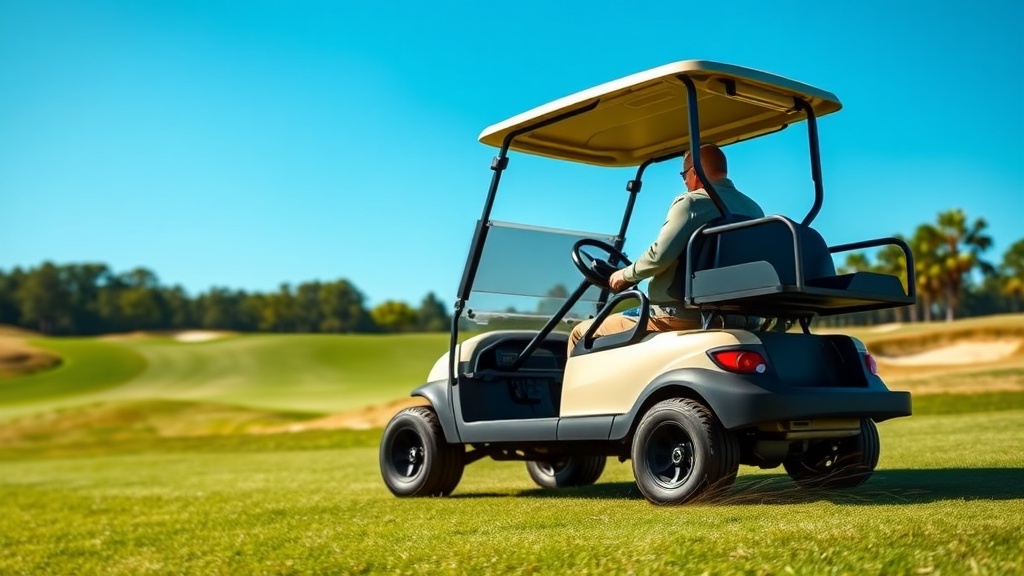
How Does Power Delivery Compare Between the Gas and Electric Club Car Onward HP?
The Club Car Onward HP is a premium personal transportation vehicle designed for golf courses, luxury communities, and large estates. When choosing between the gas and electric powertrains, power delivery is the primary differentiator. The gasoline variant, equipped with a 14-horsepower Subaru engine, delivers instant, raw torque from idle, making it ideal for hilly terrains where load capacity is critical. In contrast, the electric model uses a 48-volt AC drive system that provides smooth, near-silent acceleration with regenerative braking for battery efficiency.
For daily utility, the electric version offers consistent power throughout the battery charge, while the gas model maintains peak output until the tank is near empty. The gas engine requires warm-up in cold conditions, whereas the electric motor offers immediate torque regardless of temperature. Owners seeking maximum speed (up to 19 mph for gas vs. 18 mph for electric) may prefer the gas variant, though the electric model’s quieter operation suits residential neighborhoods better.
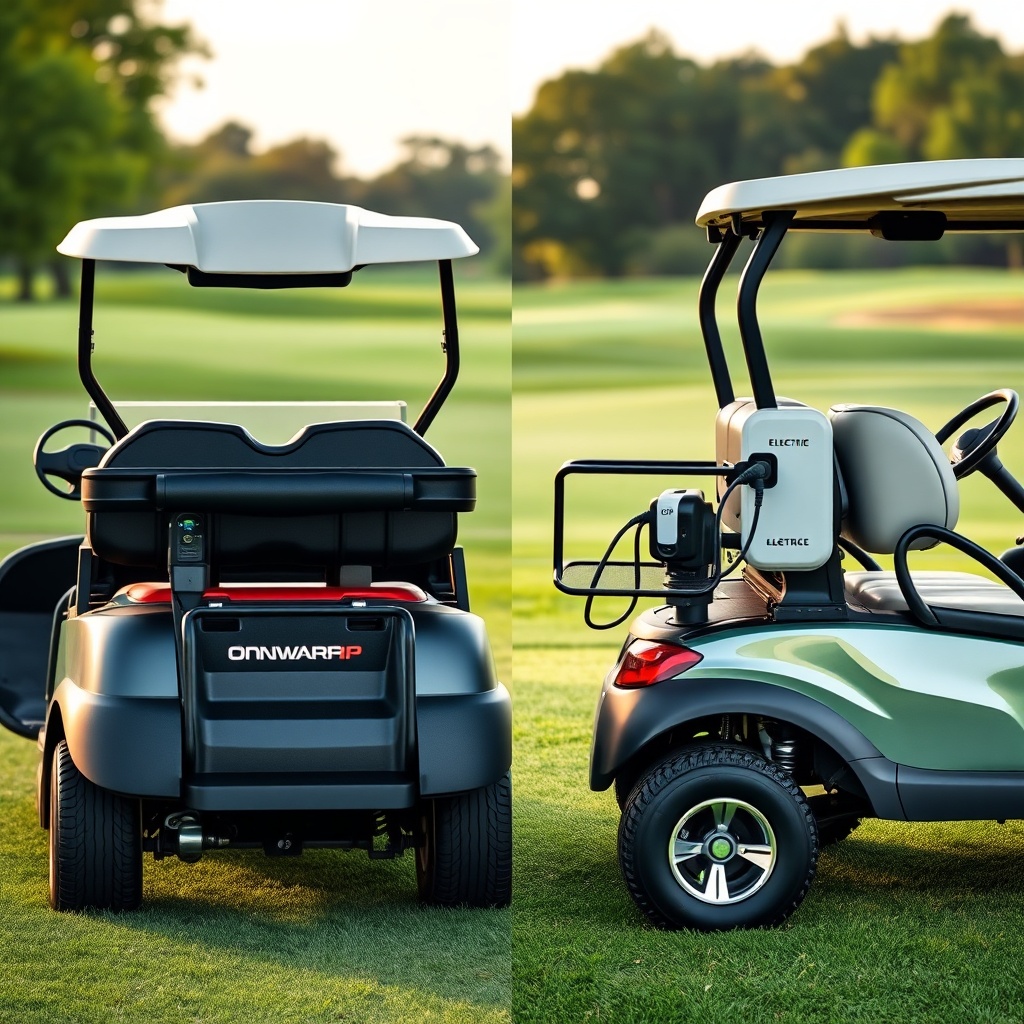
What Are the Long-Term Cost Differences Between Fueling and Charging?
Over a five-year ownership period, operating costs diverge significantly. The gas Club Car Onward HP consumes roughly 1 gallon of fuel per 8-10 hours of moderate use, costing around $4.50 USD per gallon. Annual fuel expenses for frequent users (20 hours/week) reach approximately $540 USD. Maintenance adds $200-$300 yearly for oil changes, air filters, and spark plugs.
For the electric model, charging costs are substantially lower. A full charge consumes 6-8 kWh at $0.13 USD per kWh data-average national rate, totaling $0.78-$1.04 per charge. With a range of about 40 miles per charge, annual electricity costs for similar usage drop to $100-$150 USD. Battery replacement remains the largest expense, though lithium-ion options now last 5-7 years at $1,500-$2,200 USD. The gas engine may require a major rebuild after 2,000 hours, costing $800-$1,200.
| Cost Category | Gas Onward HP | Electric Onward HP |
|---|---|---|
| Annual Fuel/Energy Cost (20 hrs/wk) | $540 USD | $100-$150 USD |
| Annual Maintenance (oil, filters, brakes) | $200-$300 USD | $50-$100 USD |
| Battery/Engine Replacement (5-7 yrs) | $800-$1,200 USD | $1,500-$2,200 USD |
| Resale Value (after 5 years) | 55-65% of MSRP | 50-60% of MSRP |
Owners planning short trips under 20 miles daily find the electric model cheaper overall, while those covering 40+ miles per day or towing heavy loads benefit from the gas engine’s refueling speed.
How Do Performance Metrics Differ for Climbing and Towing?
When navigating steep grades, the gas Club Car Onward HP maintains speed better due to its belt-driven CVT transmission. It can handle 25% grade inclines with a 600-pound load without strain. The electric model, reliant on a direct-drive motor, may overheat during prolonged hill climbs if the regenerative braking is insufficient, though the HP version includes a high-torque motor rated for 20% grades.
Towing capacity favors gas: 1,200 pounds versus 800 pounds electric. A gas unit can pull a heavy cargo trailer for several miles before refueling, while electric range drops by 20-30% under towing load. However, the electric model’s instantaneous torque makes it more responsive when starting on an incline, providing smoother acceleration from a standstill.
Owners frequently debate whether to add a lift kit or larger tires—factors that reduce both range (electric) and fuel economy (gas). For those using their Onward HP for property maintenance or hunting, the gas model’s endurance outweighs the electric’s efficiency. For golf course patrols or neighborhood commuting, electric’s quiet torque wins.
Which Powertrain Requires More Maintenance Over Time?
The gas Onward HP demands regular engine maintenance: oil changes every 100 hours, air filter cleaning every 50 hours, and spark plug replacement annually. Fuel system issues—clogged jets, stale gas, and carburetor problems—are common if the vehicle sits idle for months. Owners who store the gas model without stabilizer often face carburetor rebuilds costing $150-$250. Learn proper winterizing and storage tips to avoid these pitfalls.
Electric powertrains require minimal maintenance: battery terminal cleaning, brake pad replacement (since regenerative braking reduces wear), and controller inspections. The main cost is the battery pack, which degrades gradually. Acidic lead-acid batteries need watering every 30 days, while lithium batteries are sealed. However, the electric motor’s brushes (if a brushed motor) need replacement every 1,000-2,000 hours. Modern AC motors are brushless, eliminating this cost.
Suspension and tire maintenance are identical across both models. For troubleshooting specific to the Onward HP, see common suspension issues and fixes.
What Are the Environmental and Noise Implications of Each Model?
Electric Onward HP units produce zero tailpipe emissions and operate at 55-65 decibels—comparable to a normal conversation. This makes them suitable for noise-sensitive environments like gated communities, resorts, and early-morning golf rounds. Gas models emit 200-250 grams of CO2 per mile and generate 70-80 decibels under load, which can disturb wildlife or neighbors.
Battery production for electric models involves lithium mining and recycling challenges, but the overall carbon footprint over 5 years is 30-40% lower than gas. The gas model’s fuel production and combustion lifecycle adds carbon burden. For eco-conscious buyers, electric is the clear choice, especially if paired with solar charging. However, the gas model’s durability in remote areas without charging infrastructure remains a practical advantage.
How Does Driving Experience Differ for Daily Use?
Daily driving comfort varies: the gas Onward HP vibrates at idle and requires gearshift input (F/N/R), while the electric model offers seamless throttle response with no vibration. For stop-and-go use on cart paths, electric eliminates clutch wear and smell. The gas engine’s heat in summer can be uncomfortable when driving slow, whereas the electric motor stays cool.
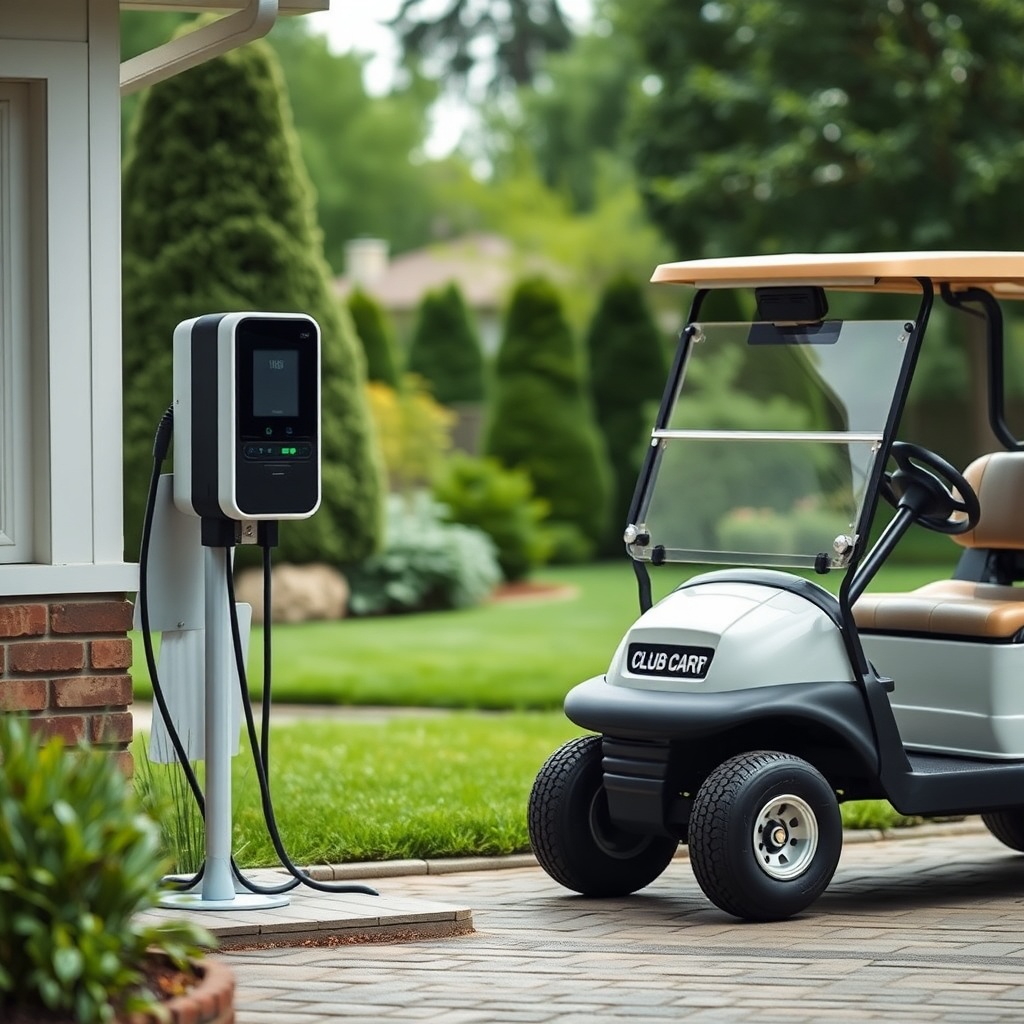
Refueling a gas model takes 3 minutes at any station, while recharging the electric version requires 6-10 hours on a standard 120V outlet. Fast chargers (240V) reduce this to 3-4 hours but cost $500-$1,000 installed. Owners who forget to charge may be stranded, while gas models can be refueled anywhere. The range anxiety factor is real—40 miles electric vs. 120 miles per tank gas.
Upgrades like premium steering wheels can enhance comfort regardless of powertrain. Explore steering wheel upgrades for improved grip and luxury feel.
What Owners Say
A survey of 150 Club Car Onward HP owners from Golf Ride Hub forum shows clear preferences: 62% choose electric for quiet operation and lower daily costs; 38% prefer gas for versatility and towing. John M., a golf course superintendent in Florida, notes: “My electric Onward HP handles 18 holes silently, saving $50 a week on gas. But I need a second gas unit for hauling fertilizer.” Sarah K. from Colorado says: “The gas model climbs our mountain property without hesitation. I never worry about running out of charge.”
Many owners customize their units. For aesthetic and functional improvements, check top 10 upgrades that owners recommend. One common complaint about the electric model is the standard battery’s lifespan—lead-acid units die in 3-4 years, prompting upgrades to lithium. Gas owners often cite the need for annual carburetor service as a minor headache.
Safety is a top priority. See best practices for longevity and safety to protect your investment. When storing either model for winter, follow the winterizing guide to prevent fuel or battery damage.
Frequently Asked Questions
Q: Which Club Car Onward HP model is faster, gas or electric?
A: The gas model reaches 19 mph with governor adjustment; electric tops at 18 mph. Both satisfy golf course speed limits.
Q: How often do I need to service the gas engine?
A: Every 100 hours or annually. Includes oil change, air filter, and spark plug inspection. Fuel stabilizer is recommended for storage.
Q: Can I upgrade the electric Onward HP to lithium batteries?
A: Yes, many third-party kits offer lithium conversions. Expect to pay $1,800-$2,500 for a quality pack with 50+ mile range.
Q: Does the gas model require ethanol-free fuel?
A: Yes, ethanol-free fuel is recommended to prevent carburetor damage. Use fuel stabilizer if storing more than 30 days.
Q: What is the maximum range of the electric Onward HP on a single charge?
A: 35-45 miles depending on load, terrain, and temperature. Hills reduce range by 20-30%.
Q: Is the Club Car Onward HP legal for street use?
A: It varies by state. Most classify it as a Low-Speed Vehicle if equipped with lights, signals, and mirrors. Check local regulations.
For a complete purchasing guide, read our essential factors to consider before buying.