Yamaha Drive2 PTV vs Club Car Onward HP: Which Golf Cart Reigns Supreme?
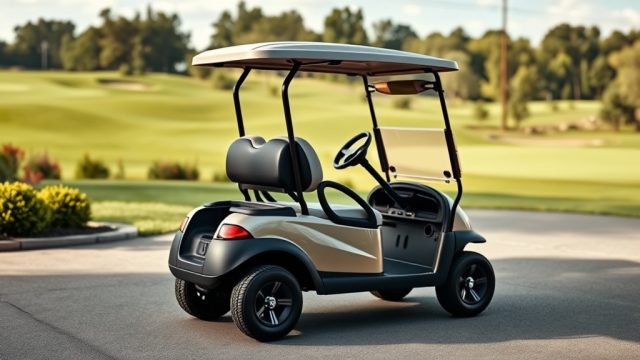
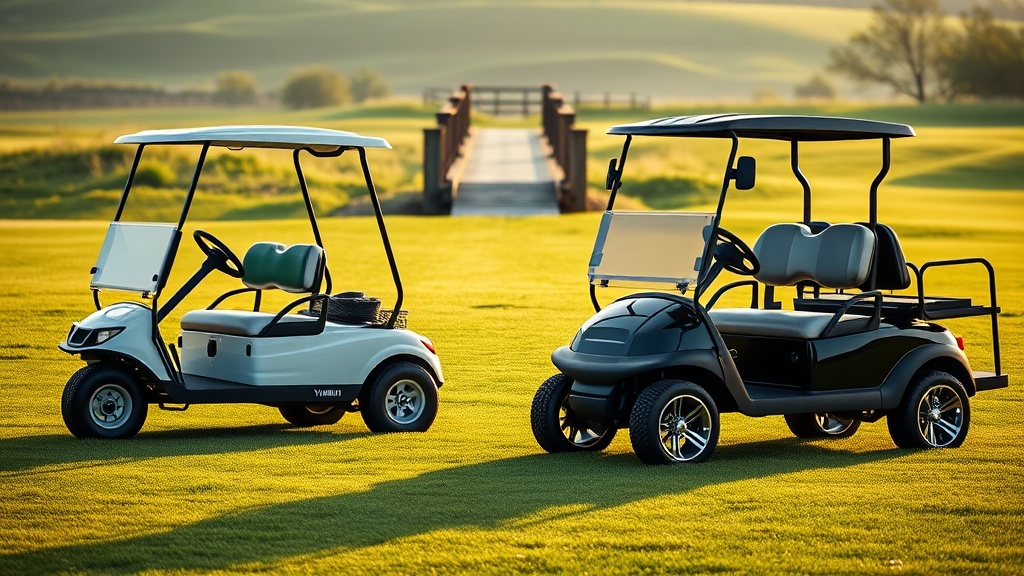
Golf cart enthusiasts and course managers often face a tough decision when choosing between two titans of the industry: the Yamaha Drive2 PTV and the Club Car Onward HP. Both models offer premium performance, but one excels in raw power while the other prioritizes refined comfort. This head-to-head comparison breaks down the key differences, real owner experiences, and value propositions to help you determine which gas-powered golf cart deserves a spot in your fleet.
Which Model Offers Better Engine Performance and Fuel Efficiency?
The core of any gas golf cart is its engine, and the Yamaha Drive2 PTV brings a 357cc, 11.4-horsepower Yamaha engine mated to a continuously variable transmission (CVT). This combination delivers smooth acceleration and a top speed of around 19 mph, though it can be tuned upward. The engine is remarkably quiet at idle and produces ample torque for moderate hills.
On the other hand, the Club Car Onward HP is equipped with a 404cc Subaru engine generating 14 horsepower, making it one of the most powerful stock gas carts on the market. The Onward HP’s larger displacement gives it a clear edge on steep inclines and when carrying heavy loads—think cart bags full of beer and gear. Its CVT is similarly refined, but the extra power comes with slightly higher fuel consumption, roughly 10–15% more than the Yamaha. In US dollars, typical fuel costs for the Yamaha run about $0.12 per mile, while the Onward HP sits closer to $0.16 per mile.
Real-world owners report the Yamaha is more than adequate for flat courses and casual neighborhood cruising, while the Club Car is the go-to for hilly terrain or spirited driving. Consider your terrain carefully: the Yamaha is a quiet workhorse, but the Club Car is a torque monster.
How Do Ride Quality and Suspension Compare?
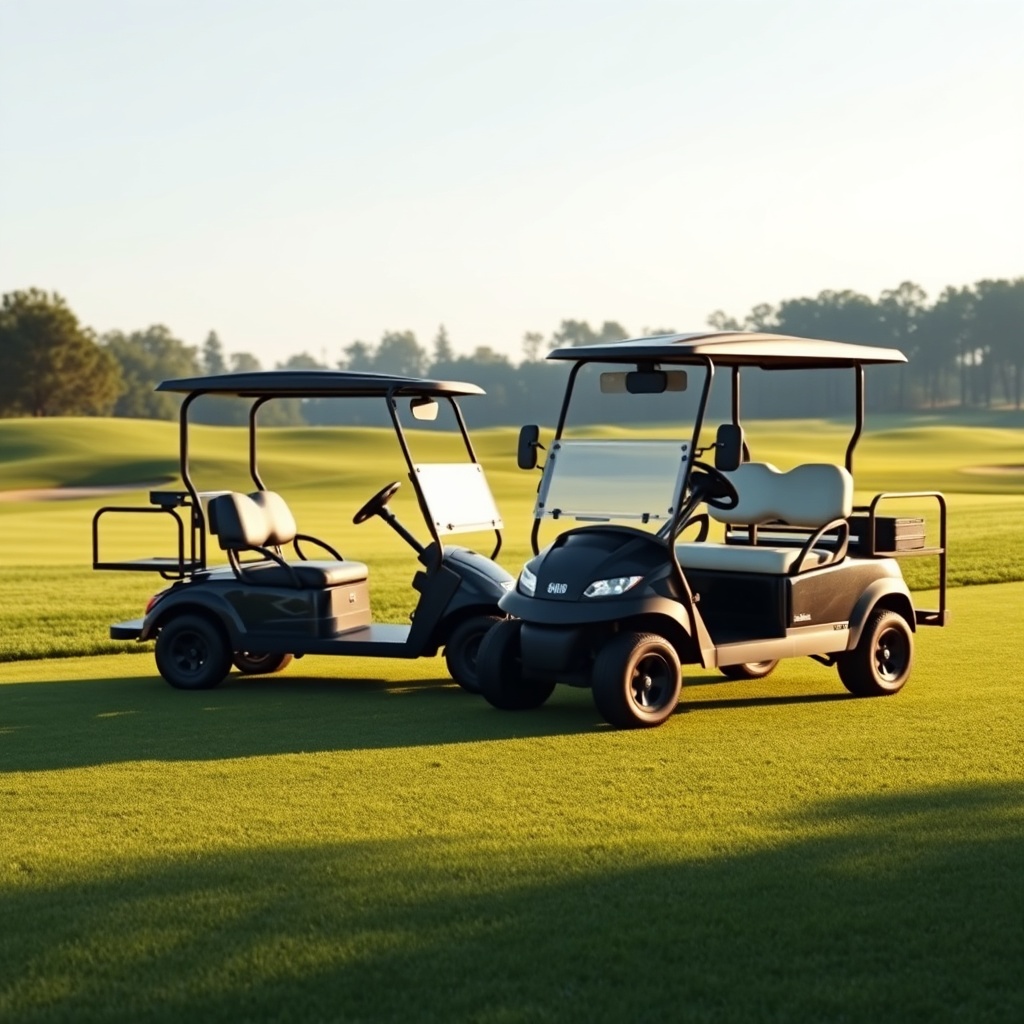
Comfort is paramount for both leisurely rounds of golf and neighborhood tours. The Yamaha Drive2 PTV features independent rear suspension with a leaf spring setup, which is a notable upgrade over older Yamaha models. This provides a stable, predictable ride that absorbs minor bumps and ruts on paved paths. However, on rough terrain or when traversing cart paths with uneven gravel, the rear end can feel a bit stiff.
The Club Car Onward HP uses a four-link rear suspension with gas shocks, a design borrowed from its luxury siblings. This translates to a more plush, car-like ride quality. Owners frequently praise how the Onward HP glides over imperfections, reducing fatigue on longer outings. Additionally, the Club Car offers adjustable Fox shocks on higher trims, further enhancing customization.
For overall ride refinement, the Club Car wins. But if you prefer a more traditional, utility-oriented feel, the Yamaha is a solid performer. Both carts feature rack-and-pinion steering for precise handling, though the Club Car’s steering feels slightly heavier and more responsive at higher speeds.
What Are the Key Dimensions and Cargo Capabilities?
| Specification | Yamaha Drive2 PTV | Club Car Onward HP |
|---|---|---|
| Overall Length | 93.5 inches | 94.0 inches |
| Overall Width | 47.5 inches | 48.0 inches |
| Wheelbase | 64.0 inches | 65.5 inches |
| Passenger Capacity | 2 (standard) / 4 (with rear kit) | 2 (standard) / 4 (with rear kit) |
| Payload Capacity | 600 lbs | 800 lbs |
| Top Speed (factory) | 19 mph | 21 mph |
| Ground Clearance | 5.5 inches | 6.0 inches |
| Turning Radius | 16.5 feet | 17.0 feet |
The Club Car Onward HP’s higher payload capacity and added ground clearance make it the better choice for off-road or utility work, such as towing a small trailer or hauling landscaping gear. The Yamaha remains more nimble in tight spaces thanks to its slightly smaller turning radius. Both carts offer similar passenger capacity, but aftermarket rear seat kits are widely available for both.
Which Cart Offers Better Standard Features and Customization?
Factory features can significantly impact the ownership experience. The Yamaha Drive2 PTV comes standard with LED headlights, a digital speedometer, and a built-in USB charger. The optional accessories for Yamaha Drive2 include a weather enclosure, premium stereo, and a folding windshield. One unique option is Yamaha’s rear utility bed kit, which turns the cart into a mini truck.
The Club Car Onward HP starts at a slightly higher base price of around $8,999 in CAD (about $6,900 USD) compared to the Yamaha’s $7,499 CAD ($5,750 USD). However, Club Car packs in more standard luxury: a deluxe dash with a 12-volt outlet, carpeted floor mats, and a more robust wiring harness for accessories. Additionally, Club Car’s extensive custom golf cart packages allow for nearly endless personalization, from painted bodies to lift kits and high-end seats.
The Yamaha wins on affordability and practical utility; the Club Car wins on immediate luxury and customization breadth. For an owner who wants a turnkey cart that feels upscale, the Onward HP is the winner. For the bargain-hunter who likes to build out their own rig, the Drive2 PTV is the better platform.
What Do Owners Say About Reliability and Long-Term Ownership?
Owner forums and dealership reports paint a clear picture: both carts are exceptionally reliable, but their maintenance profiles differ. Yamaha Drive2 PTV owners consistently report that the engine requires little more than routine oil changes and belt inspections to run for 5,000+ hours. The EFI (electronic fuel injection) system eliminates carburetor issues, which is a major plus.
Club Car Onward HP owners praise the Subaru engine’s bulletproof reputation, but note that its higher output can lead to faster belt wear and increased fuel system sensitivity. Some owners recommend annual valve adjustments for optimal performance. Club Car’s aluminum frame is rust-proof, which is a critical advantage in wet climates or near saltwater—an important factor for golf carts for coastal areas.
Common real-world complaints: Yamaha owners sometimes mention that the stock brakes feel a bit spongy, and the cart can be difficult to push manually when turned off. Club Car owners often cite the slightly higher vibration and noise at full throttle compared to the Yamaha. Overall, both enjoy strong resale values, with the Club Car retaining roughly 65% of its value after five years, versus 60% for the Yamaha.
Frequently Asked Questions
Which cart is better for hilly terrain?
The Club Car Onward HP’s higher torque and 21 mph top speed make it the clear choice for steep hills. The Yamaha is adequate for moderate slopes but can struggle on extended inclines.
Can I use these carts on public roads?
Yes, both are street-legal in most jurisdictions when equipped with a street kit (headlights, turn signals, mirrors, horn, and seat belts). Always check local laws.
What is the warranty coverage?
Yamaha offers a 2-year/2,500-hour limited warranty on the Drive2 PTV. Club Car provides a 2-year/2,000-hour limited warranty on the Onward HP, with extended options available.
Are electric versions available?
Yes, both models have electric variants. The Club Car Onward HP is available as an electric model with a lithium-ion battery option. The Yamaha Drive2 electric is also widely popular.
How much does a new Yamaha Drive2 PTV cost in CAD?
Base pricing starts at approximately $7,499 CAD (around $5,750 USD) before options and taxes. Prices vary by dealer and region.
Can I add a rear seat kit to either cart?
Absolutely. Both brands offer factory and aftermarket rear seat kits. Club Car’s kit is slightly easier to install, while Yamaha’s is more affordable. Expect to pay $500–$900 CAD for a quality kit.